Course Details
Home> Course Details
Intelligent Robotics Hardware
Course Overview
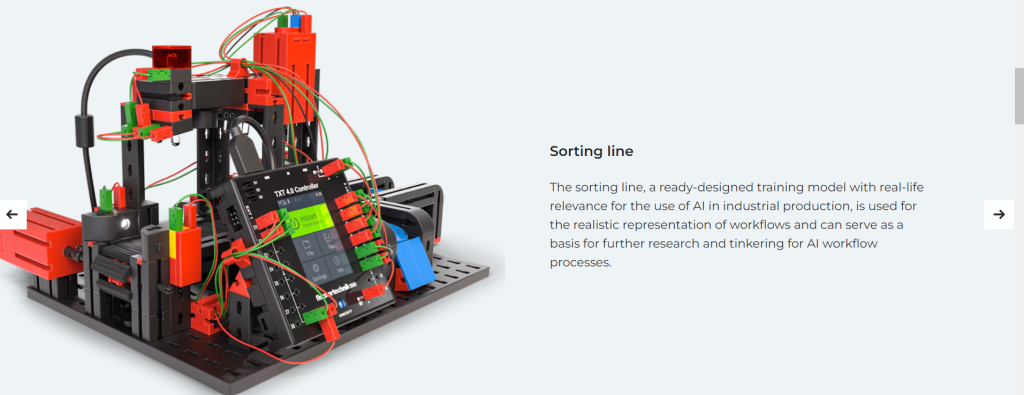
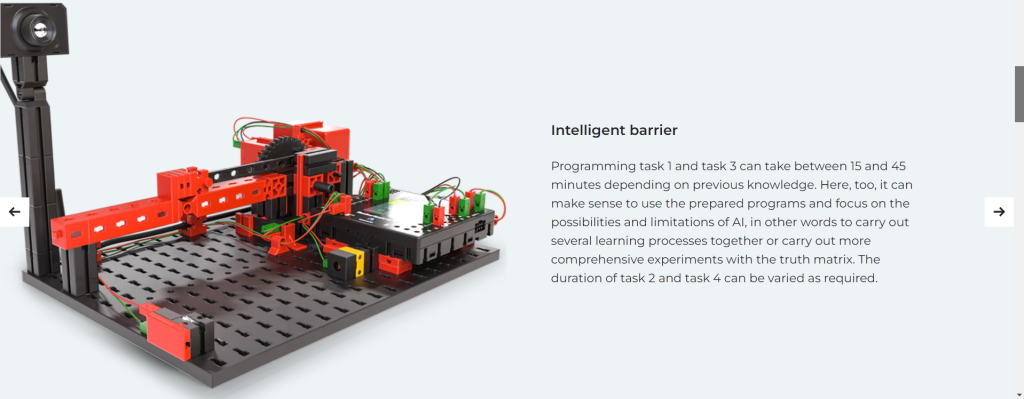
This course offers a comprehensive introduction to the world of IoT robotics and artificial intelligence by combining hands-on sensor technology with machine learning and automation. Students begin by building and programming sensor stations to measure environmental factors like temperature, humidity, air quality, and noise, learning to analyze and visualize this data through real-time IoT dashboards. They then explore AI fundamentals by collecting image data, training models on a computer, and deploying these models to recognize objects in practical scenarios such as intelligent barriers and sorting lines. Throughout the course, learners gain experience in precise motor control, remote and voice operation, and modular programming. They also develop skills to evaluate AI performance and improve system reliability. By integrating these technologies into cohesive projects, students build practical problem-solving abilities and a strong foundation for future careers in robotics, AI, IoT, and automation.
Learning Outcomes
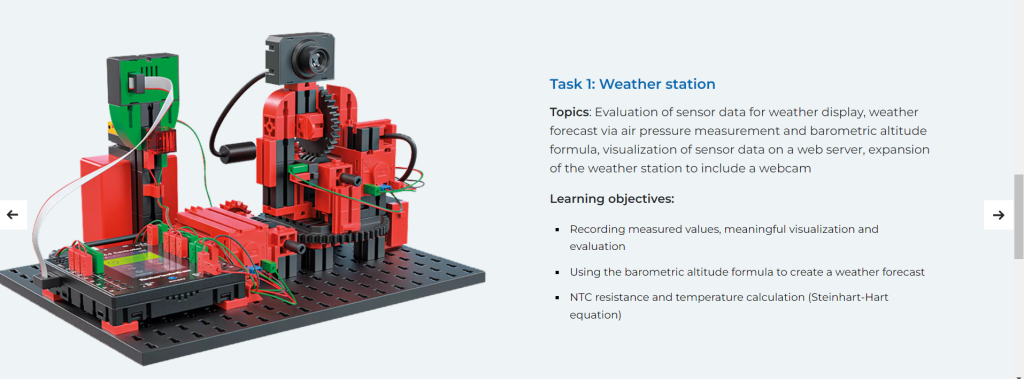
Build and program IoT sensor stations to accurately measure and analyze environmental data such as temperature, humidity, air pressure, air quality, light, and noise levels.
Apply mathematical formulas and scientific principles (e.g., barometric formula, Steinhart-Hart equation) to interpret sensor data and create forecasts or indicators.
Design and implement IoT communication using protocols like MQTT to transmit data to online dashboards for real-time visualization and remote monitoring.
Integrate multimedia elements, such as webcams, into IoT systems for enhanced data representation and surveillance.
Develop and train artificial intelligence (AI) models by collecting labeled image data, running training processes on computers, and deploying trained models on embedded controllers.
Implement AI-powered object recognition systems to classify objects and control hardware outputs (LEDs, motors, barriers) based on AI inference results.
Apply AI and machine learning concepts in practical automation scenarios, such as intelligent barriers and sorting lines, to make autonomous decisions based on sensor input.
Program precise motor control and actuator management using encoder feedback for accurate movements in robotic systems.
Structure modular, clear, and maintainable programs using functions and event-driven programming techniques.
Evaluate AI system performance using statistical methods, including true/false positives and negatives, confidence levels, and reliability indicators, to improve model accuracy.
Design user-friendly interfaces and enable voice or remote control to facilitate intuitive interaction with IoT and robotic systems.
Integrate multiple technologies into cohesive, functional projects combining sensing, AI, communication, and actuation for real-world applications.
Develop problem-solving skills and technical knowledge that prepare students for further study or careers in robotics, AI, IoT, and automation engineering.
Assemble sensor station to measure temperature, humidity, and air pressure
Program data collection and display
Apply barometric formula for weather forecasting
Send sensor data to IoT cloud dashboard using MQTT
Add webcam image transmission to the dashboard
Measure indoor air quality, brightness, and noise
Set alert thresholds for optimal indoor environment
Build an alarm system reacting to noise and motion
Control camera remotely via voice and dashboard
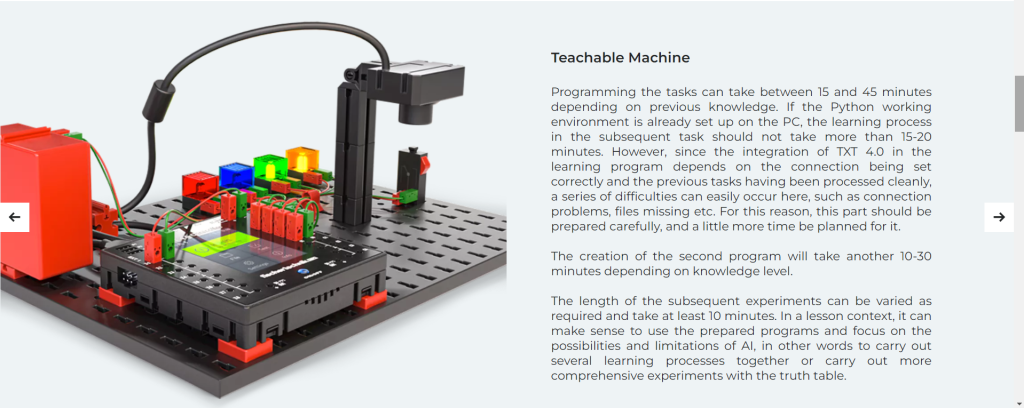
Create image capture program with button controls
Collect labeled images for AI training
Train AI on PC using Python
Transfer AI model to controller
Implement object recognition with physical output control
Program AI-powered barrier to open or close based on object recognition
Experiment with object and gesture recognition
Assemble and operate AI sorting line with camera and conveyor
Sort items based on AI classification
Perform AI accuracy testing using true/false positives/negatives
Display AI reliability using LED indicators
Combine IoT sensor data, AI recognition, and actuator control into one project
Design remote monitoring and user interfaces
Courses
Meet Our Teacher

Name : Engr. Safdar Munir
Designation : Trainer
Experience : 7 years
Safdar Munir is a multidisciplinary professional with expertise in AI, IoT, robotics, and digital media. With a strong background in teaching, project leadership, and creative content development, he has contributed to several tech education initiatives, startups, and institutions. Safdar is passionate about empowering youth through technology and innovation.